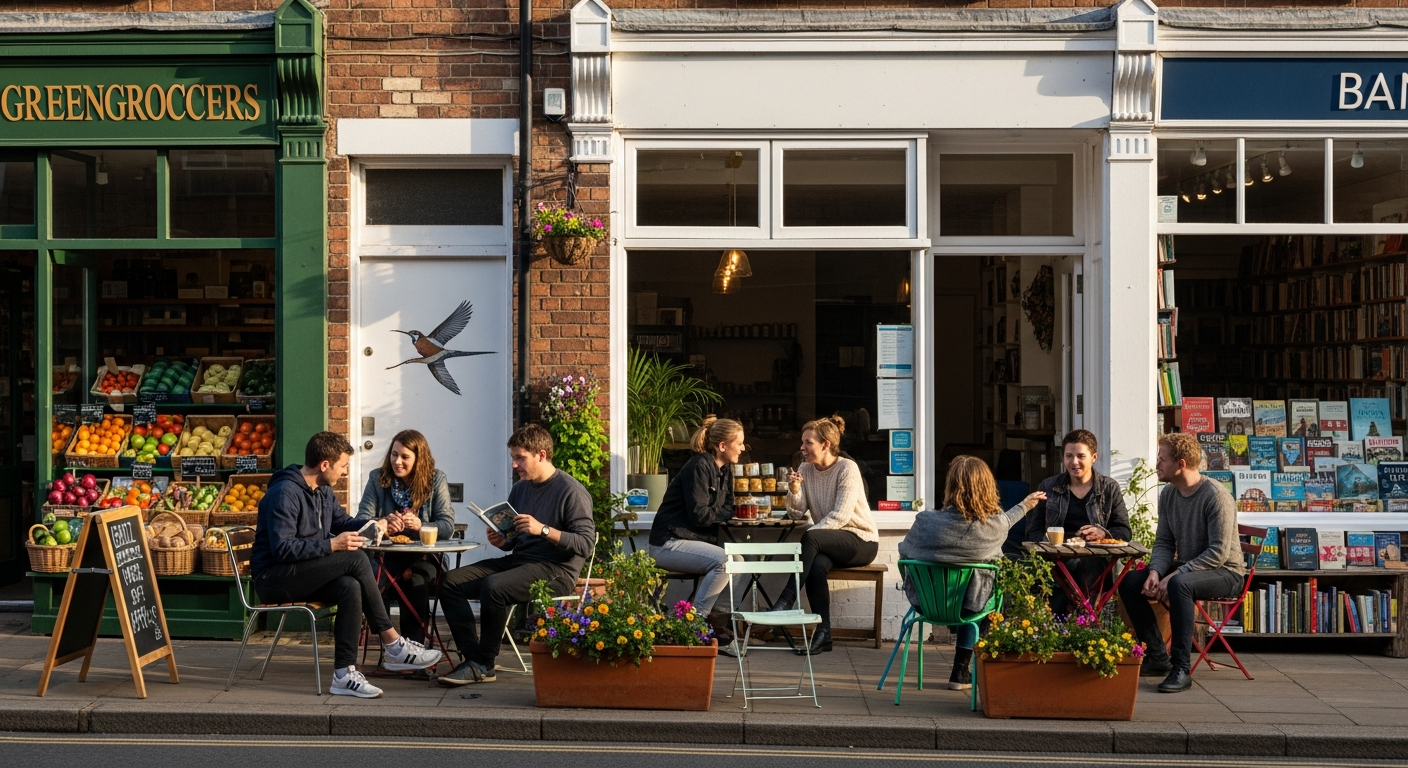
There’s a quiet revolution brewing across Britain, and it’s not happening in Parliament or on the big screens. It’s unfolding on our high streets, our market town squares, and even down forgotten little lanes. It’s the subtle, yet utterly transformative power of the independent café. We’re not talking about the big chains with their identikit menus and predictable layouts; we’re talking about that unique, often quirky, locally-owned spot that becomes more than just a place to grab a flat white. It becomes the very heartbeat of a street, changing its entire character.
Picture it: a street that was perhaps a little down at heel, a few empty shopfronts, a general air of quiet resignation. Then, a new sign goes up – often hand-painted, always welcoming. Inside, there’s the aroma of freshly ground coffee, the clatter of ceramic mugs, and the gentle hum of conversation. Suddenly, that street isn't just a place you pass through; it’s a destination. This isn't just commerce; it's community, culture, and a real shot in the arm for local pride. This is the #BuyLocal spirit in full, glorious technicolour, and it’s something worth celebrating.
A Ripple Effect: How One Spot Transforms a Whole Stretch
The transformation an independent café brings isn't just about coffee and croissants. It’s a multi-layered phenomenon, a true ripple effect that can wash over an entire street and beyond. First, there's the obvious boost in footfall. People come for the coffee, but they stay for the atmosphere. And while they’re there, they might just pop into the bookshop next door, browse the antique emporium across the way, or grab a few bits from the greengrocer. Suddenly, businesses that were struggling for visibility find themselves bathed in the reflected glow of the café’s popularity.
For wider context, read Discover Britain's Spring Farmers' Markets: Fresh Produce & Local Charm, Britain's Artisan Cheese Renaissance: From Downs to Highlands, The UK Allotment Boom: Why Brits Are Digging for Victory and Veg, Money Matters coverage.
Beyond the immediate economic lift, there's a tangible shift in the street's ambiance. Empty windows become bustling scenes, outdoor seating spills onto pavements, adding a continental charm. Planters appear, street art might even follow. There’s a visible investment in the street’s appearance, often driven by the café owner’s desire to create a welcoming space, which then encourages neighbours to spruce up their own shopfronts. It’s an infectious enthusiasm for regeneration that makes a real difference. And, crucially, a busy street is a safer street; more eyes and ears create a sense of guardianship.
"It's not just about selling coffee; it's about creating a place where people feel connected. You see the same faces every day, you know their orders, you hear about their lives. It knits the street together."
This quote, from a café owner we chatted with in a small Yorkshire market town, perfectly encapsulates the sentiment. These places aren't just businesses; they are vital community hubs.
From the Cornish Coast to Scottish Glens: Regional Charms
The beauty of Britain is its incredible regional diversity, and the independent café scene reflects this wonderfully. The impact of a café can look delightfully different depending on where you are:
The Cornish Fishing Village: Imagine a narrow, winding street in a coastal village, perhaps with a touch of salty sea air. An independent café, housed in an old fisherman’s cottage or a renovated net loft, becomes the anchor. It’s where the locals gather for a pre-work brew, where tourists pause for a cream tea (jam first, naturally!) after a bracing walk, and where the daily catch from the harbour might even feature on the specials board. It preserves the unique character of the village, stopping it from becoming just another tourist trap. It’s a genuine taste of Cornwall, supporting local bakers and producers.
The Northern Industrial Quarter: In parts of the North West or Yorkshire, old mill buildings and industrial streets are finding new life. A café, often with exposed brickwork and an industrial-chic vibe, sets up shop. It doesn't just serve coffee; it serves as a meeting point for start-ups, a creative hub for artists, and a place for residents to socialise in an area once devoid of public spaces. It signifies a shift, a renaissance, drawing in other small businesses like design studios or artisan workshops, revitalising a whole district.
The Scottish Borders Market Town: Here, an independent café nestled on a historic High Street becomes a warm refuge from the chill, a place where generations gather. It might specialise in local delicacies like buttery shortbread or offer a traditional Borders breakfast. It acts as an informal information centre, a place where local gossip is shared, and community events are advertised. It helps maintain the unique identity of these towns, often battling depopulation, by giving people a reason to stay, to meet, and to connect.
The East London Mews: Even in our bustling capital, hidden gems transform spaces. A forgotten mews, once just a car park, can burst into life with a tiny, independent coffee shop. Suddenly, neighbours who never interacted before find themselves chatting over oat lattes. The mews becomes a vibrant, pedestrian-friendly micro-community, sparking other small creative businesses to move in, creating a little oasis of calm and character in the urban sprawl.
In each case, these cafés are more than just businesses; they are custodians of culture, promoters of local produce, and vital social conduits. They encourage us all to #BackBritain by investing our hard-earned cash in the places and people that truly matter.
Beyond the Buzz: Economic & Social Sweeteners
The economic impact extends far beyond the café’s till. A thriving independent café typically sources its ingredients locally – milk from the regional dairy, bread from the independent bakery, cakes from a home baker, fresh produce from local farms. This creates a powerful local supply chain, injecting money directly back into the local economy. For every pound spent in an independent business, a significantly larger proportion stays within the local area compared to spending that same pound in a national chain. It’s an economic truth worth remembering, especially when we’re all trying to make our money go further.
Socially, these cafés are unsung heroes. They offer first jobs to young people, provide flexible work for parents, and create welcoming spaces for retirees to meet friends. They often host local art, organise book clubs, or even become venues for acoustic music nights. They are, in essence, our modern-day village greens, offering a democratic space for all. This sense of belonging, of having a 'third place' beyond home and work, is incredibly important for mental well-being and community cohesion.
Our Call to Action: Keeping Britain’s Character Alive
So, the next time you fancy a brew, think about where you're heading. Choosing that independent café isn't just a personal preference; it's a powerful act of community support. It's a vote for local character, for unique flavour, and for the very fabric of our streets. It's a way to directly support jobs, foster local talent, and contribute to the vibrant tapestry of Britain.
Let’s continue to champion these vital local businesses. Explore new places, tell your friends, and share your favourite independent spots. Every cup truly makes a difference. If you're keen to discover more fantastic independent businesses in your area, do check out our Buy Local directory. And if you believe in championing local, grassroots stories and good news for ordinary Brits, why not join our community today? Together, we can keep Britain’s streets buzzing with independent spirit!